Wonders of Ajanta Caves

Lucas Schneider
| 28-10-2024
 · Travel team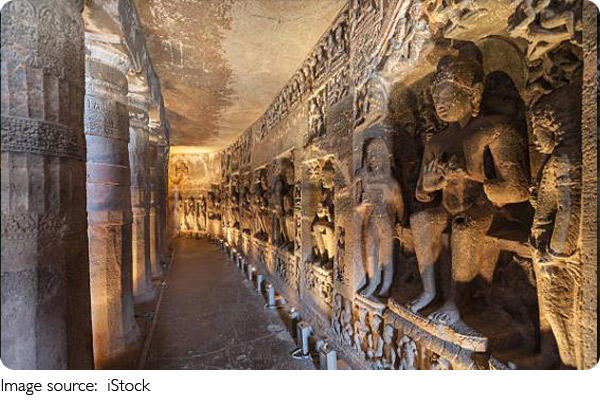
Dear Lykkers, tucked away in the rugged hills of Maharashtra, India, lies a hidden gem. Carved into a horseshoe-shaped cliff overlooking the Waghur River, 30 rock-cut Buddhist cave monuments take visitors on a journey back in time, showcasing an era of artistic brilliance and deep devotion!
These caves, a UNESCO World Heritage Site, are renowned for their breathtaking frescoes, intricate sculptures, and impressive architecture, offering a glimpse into the cultural richness of ancient India!
How to Reach the Ajanta Caves
By Air:
The nearest airport is in Aurangabad, approximately 100 kilometers from the caves. From there, you can hire a taxi or take a bus to reach the site.
By Train:
The closest railway station is Jalgaon, located about 60 kilometers from Ajanta. Regular trains connect Jalgaon to major cities like Mumbai and Pune.
By Road:
Ajanta Caves are well-connected by road, with frequent buses and taxis available from Aurangabad, Jalgaon, and other nearby cities.
The History Behind Ajanta Caves
The Ajanta Caves date back to two distinct periods: the Satavahana Dynasty (2nd century BCE) and the Vakataka Dynasty (5th century CE). These caves were used as monastic retreats for Buddhist monks and played a crucial role in spreading the messages. The earlier caves belong to the Hinayana phase, where the Buddha was represented symbolically, while the later caves belong to the Mahayana phase, where the Buddha is depicted in human form.
For centuries, the Ajanta Caves were forgotten, hidden by dense jungle. It wasn’t until 1819 when a British officer, John Smith, stumbled upon them during a tiger-hunting expedition. Since then, the caves have become one of the most significant historical sites in India, admired for their stunning frescoes and intricate carvings.
Ajanta Caves, Maharashtra, India [Amazing Places 4K]
Video by Amazing Places on Our Planet
The Artistic Brilliance of Ajanta Caves
Mesmerizing Frescoes
The frescoes in Ajanta are the caves' most celebrated feature, showcasing intricate details and vibrant colors that have stood the test of time. These paintings depict scenes from the Jataka tales, which are stories of the Buddha’s previous lives. The narratives are filled with moral lessons, featuring animals, deities, and humans in elaborate compositions.
One of the most famous paintings is the Padmapani Bodhisattva in Cave 1, where a serene figure of the Bodhisattva holds a lotus in his hand. The delicate expressions, the soft blending of colors, and the attention to detail in these frescoes continue to captivate art enthusiasts and historians alike.
Exquisite Sculptures
Beyond the paintings, the caves are filled with exquisite sculptures. The monumental figures of the Buddha in various postures—meditation, teaching, and reclining—can be found throughout the caves. One of the most iconic sculptures is the Reclining Buddha in Cave 26, representing the moment of Buddha’s Mahaparinirvana (his final passing into nirvana).
Architectural Marvel
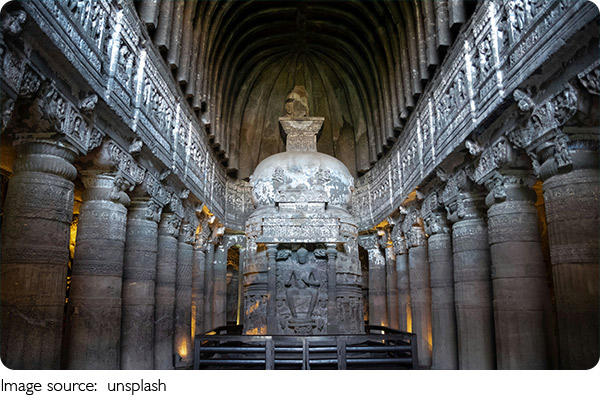
The Ajanta Caves are not only artistic masterpieces but also architectural marvels. The caves consist of Chaityas (prayer halls) and Viharas (monastic cells), carved entirely out of solid rock. The Chaityas, with their vaulted ceilings, columns, and stupas, served as places of worship, while the Viharas provided living quarters for monks.
Exploring the Noteworthy Caves
Cave 1
Cave 1 is known for its striking frescoes that depict the life of the Buddha. The walls are adorned with vibrant paintings of Bodhisattvas, kings, and queens, each telling a unique story. The central figure of the seated Buddha, surrounded by celestial beings, exudes a sense of peace and divinity.
Cave 2
Cave 2 is renowned for its intricate ceilings, which are covered in detailed floral patterns and geometric designs. The walls depict scenes from the Buddha’s previous lives, focusing on compassion and wisdom. The frescoes are known for their incredible use of color and shading.
Cave 19
Cave 19 is a beautiful Chaitya hall, featuring a towering stupa and intricate carvings. The entrance is flanked by two standing Buddhas, while the interior is adorned with sculptures of various deities and mythical creatures.
Cave 26
Cave 26 houses the magnificent Reclining Buddha, a large sculpture depicting the Buddha at the moment of his death and entry into nirvana. The surrounding walls are covered with detailed reliefs that narrate significant events from the Buddha’s life.
Best Time to Visit the Ajanta Caves
The best time to explore the Ajanta Caves is during the cooler months, from November to March. The weather is pleasant, making it easier to explore the caves and enjoy the surrounding landscape. The caves are open from 9:00 AM to 5:30 PM, and it’s advisable to plan a full day to explore this vast site in detail.
Preserving a Timeless Legacy
The Ajanta Caves, though magnificent, are fragile due to their age and the delicate nature of the paintings. Efforts have been made to conserve these invaluable treasures, and visitors are encouraged to respect the preservation rules, which include refraining from flash photography inside the caves.
The Ajanta Caves are a testament to the artistic and spiritual heritage of ancient India. The captivating frescoes, impressive sculptures, and architectural brilliance offer visitors a unique glimpse into the lives and beliefs of early Buddhist monks and artists. A visit to these ancient rock-cut monuments is like stepping back in time, where every cave tells a story of devotion, creativity, and timeless beauty.