Rani Ki Vav

Elena Rossi
| 28-10-2024
 · Travel team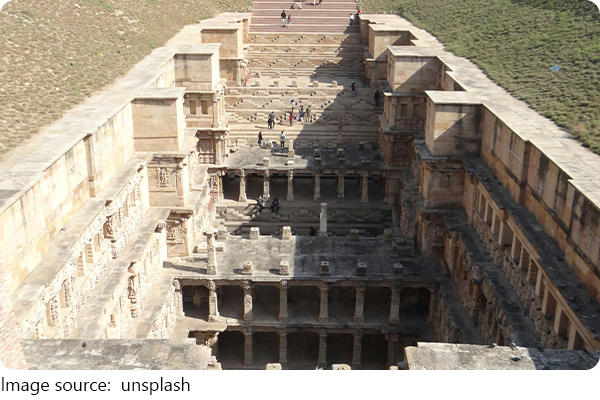
Rani Ki Vav, located in the ancient town of Patan, Gujarat, is one of India's most magnificent stepwells and a UNESCO World Heritage Site.
It is built during the 11th century by Queen Udayamati in memory of her husband, King Bhimdev-I of the Solanki dynasty. Rani Ki Vav, meaning "Queen's Stepwell," stands as a stunning example of India's rich cultural heritage and engineering prowess.
How to Get There
Rani Ki Vav is located in Patan, about 125 kilometers from Ahmedabad. The nearest airport is Sardar Vallabhbhai Patel International Airport in Ahmedabad. From there, you can either hire a taxi or take a bus to Patan. The nearest railway station is Mehsana, which is around 50 kilometers away from Patan.
The Architecture and Significance of Rani Ki Vav
The stepwell is designed as an inverted temple, with seven levels of stairs that descend deep into the earth. The beauty of Rani Ki Vav lies in its intricate carvings that adorn every inch of the walls. More than 500 principal sculptures, depicting gods, goddesses, celestial beings, and mythological figures, are masterfully crafted into the sandstone walls. The most striking feature is the image of Lord Vishnu reclining on a serpent, found in the deepest part of the well.
This stepwell was not just a utilitarian structure but also a spiritual one, providing access to water while symbolizing the sanctity of water in ancient Indian traditions. The Vav also served as a place for social gatherings, rituals, and an architectural marvel to honor the king's legacy.
Rani ki Vav: A stepwell or a place of worship?
Video by HISTORY TV18
Exploring the Artistic Detail
Intricate Sculptures
The sculptures at Rani Ki Vav reflect the grandeur of the Solanki dynasty. The intricately carved figurines include representations of Hindu deities like Vishnu, Brahma, Shiva, and various forms of Shakti. Each sculpture is a masterpiece, showcasing detailed expressions, poses, and divine grace, bringing ancient myths and legends to life.
Symbolism and Spiritual Significance
Every layer of the stepwell holds spiritual significance. The lowest levels, which were once submerged underwater, symbolize purification, and the journey down into the Vav is seen as a descent into the underworld, followed by ascension towards divine energy.
A UNESCO World Heritage Site
In 2014, Rani Ki Vav was recognized as a UNESCO World Heritage Site for its outstanding universal value. This stepwell stands as a rare surviving example of its kind, showcasing not only the advanced engineering techniques of the time but also the deep connection between art, architecture, and the environment. Its inclusion in the UNESCO list underscores the importance of preserving India's cultural heritage for future generations.
Best Time to Visit Rani Ki Vav
The best time to visit Rani Ki Vav is during the winter months, from October to March when the weather is pleasant. This makes exploring the stepwell's intricate details a comfortable experience. It's also the ideal season for photography, with the soft sunlight enhancing the beauty of the carvings.
Accommodation and Dining Near Rani Ki Vav
While Patan itself offers a few modest accommodations like Hotel Navjivan and The Grand Raveta, for a more luxurious stay, you can base yourself in Ahmedabad, which has a wider range of hotels such as Hyatt Regency and Fortune Park. Dining in Patan offers a taste of authentic Gujarati cuisine, with local restaurants serving dishes like dhokla, khandvi, and undhiyu.
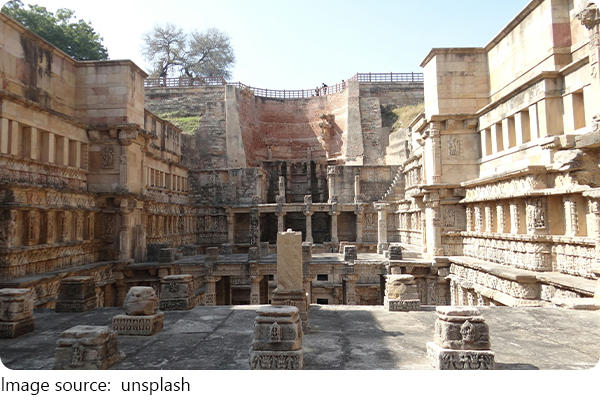
Rani Ki Vav is more than just a stepwell—it's a celebration of history, art, and engineering from a bygone era. As you walk through its intricately carved staircases and admire the delicate artistry, you'll be transported back to an ancient time when water and spirituality converged in this architectural masterpiece.
Dear Lykkers, a visit to Rani Ki Vav is a must for history enthusiasts, architecture lovers, and anyone looking to explore the hidden gems of India's heritage.