Outdoor Binocular Guide

Mason O'Donnell
| 27-02-2026
 · Lifestyle team
The first time you spot a hawk perched far across a canyon, the details can feel almost magical. With the right binoculars, that distant bird transforms from a tiny silhouette into a vivid image, showing feathers, eye color, and posture.
Outdoor binoculars aren't just gadgets—they're a bridge to nature, letting you explore wildlife, landscapes, and even the night sky in ways your eyes alone can't capture. Choosing the right pair and learning how to use them effectively can make every outdoor adventure more rewarding.
Understanding Binocular Basics
Before picking a pair, it helps to understand what the numbers on binoculars mean. Most binoculars display something like 8x42 or 10x50.
Magnification: The first number shows how many times closer an object appears. For general wildlife spotting, 8x or 10x magnification is ideal—high enough to see details without making it hard to hold the binoculars steady.
Objective lens diameter: The second number indicates the lens size in millimeters. Larger lenses (42–50 mm) gather more light, making them better for low-light conditions like dawn or dusk.
Field of view: Wider fields let you scan larger areas, helpful for tracking birds or moving animals. Narrower fields work well for focusing on a single distant target, like a mountain peak.
Example in practice: An 8x42 pair offers a balance of stability, brightness, and field of view, making it ideal for both hiking and casual wildlife observation.
Actionable tip: Test binoculars in a store or rental before buying. Notice how easy it is to focus, how heavy they feel, and whether the view stays clear at the edges.
Choosing the Right Type for Your Activity
Different activities benefit from specific binocular styles.
Compact binoculars: Lightweight and easy to carry, usually 8x25 or 10x25. Great for travel or short hikes when weight is a concern.
Full-size binoculars: Larger lenses and better light-gathering power, typically 8x42 or 10x50. Excellent for birdwatching, wildlife, or low-light conditions.
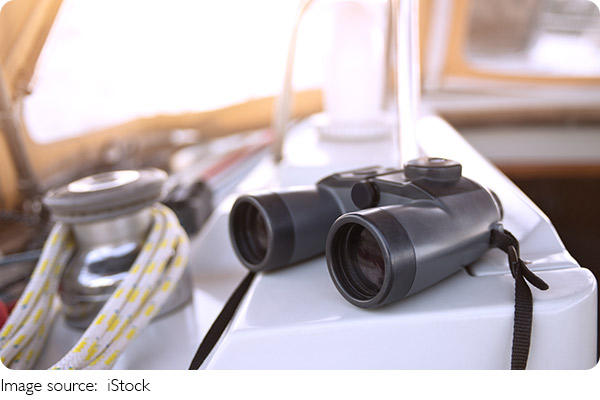
Waterproof or rugged models: Essential for boating, coastal hikes, or rainy weather. Nitrogen-filled or sealed designs prevent fogging and resist moisture.
Example in practice: For a multi-day hike in a forest, a full-size 10x42 waterproof binocular ensures you can see distant wildlife even under shaded canopies and sudden rain showers.
Actionable tip: Match your binocular weight to your typical hike distance. A heavy pair on a long trek can cause fatigue and reduce enjoyment.
Proper Handling and Stabilization
Even the best binoculars can be frustrating without good technique.
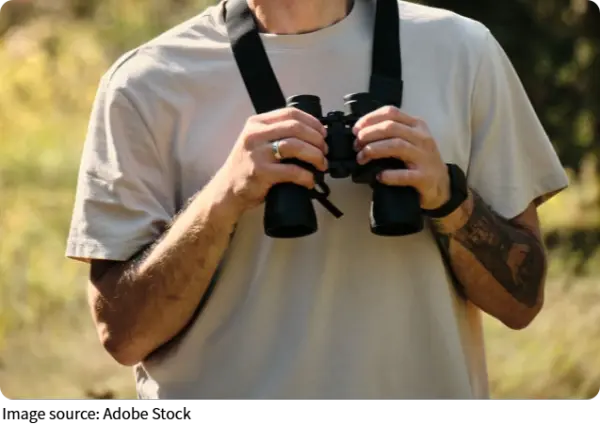
Grip and posture: Hold binoculars with both hands, elbows tucked in. Keep your shoulders relaxed and feet shoulder-width apart for stability.
Tripod use: For high magnification (12x or above) or extended viewing, attach binoculars to a tripod. This eliminates shake and lets you observe wildlife or celestial objects for longer periods.
Focus adjustment: Use the central focus wheel for coarse adjustments, and the diopter ring for fine-tuning one eye. Practice adjusting quickly so you don't miss fleeting moments.
Example in practice: While watching a hawk swoop across a valley, adjusting the focus wheel as it changes distance ensures a sharp, detailed view without losing the bird.
Actionable tip: Keep a lens cleaning kit handy. Even a small smudge can blur distant details. Microfiber cloths and gentle lens solution work best.
Maintaining Your Binoculars
Long-term care preserves clarity and extends the life of your binoculars.
Storage: Keep them in a padded case when not in use. Avoid leaving them in hot cars or direct sunlight, which can warp components.
Cleaning: Gently brush away dust or sand before wiping. Use a soft microfiber cloth with lens solution, never paper or rough fabrics.
Regular checks: Inspect hinges, eyecups, and seals for damage. Tighten loose screws and ensure lenses remain aligned.
Example in practice: After a desert hike with blowing sand, remove the binoculars from your pack, use a gentle brush to clear particles, and then clean the lenses carefully to avoid scratches.
Actionable tip: Periodically check focus alignment on a distant object. Misalignment over time can strain your eyes and reduce clarity.
Getting the Most Out of Your Outdoor Adventures
Using binoculars effectively opens new perspectives on nature.
Wildlife observation: Scan areas slowly, moving your binoculars in small arcs. This helps spot camouflaged animals before they notice you.
Scenic exploration: Observe distant peaks, cliffs, or rivers in detail. Notice patterns in rock formations or movement in the landscape.
Stargazing: Binoculars complement telescopes for wide-field views of constellations, the Milky Way, or bright planets. An 8x50 pair offers bright, steady images for night-sky exploration.
Example in practice: On a morning hike, spot a deer at 300 meters. Follow its movement carefully, noting feeding patterns and behavior—all visible through properly focused binoculars without disturbing it.
Actionable tip: Pair binocular use with a small notebook or app to record observations. Over time, you'll notice patterns in wildlife behavior or landscape changes.
Binoculars transform outdoor adventures into moments of connection. They let you see beyond the horizon, study details you'd otherwise miss, and engage with the environment more deeply. With the right selection, handling, and care, each hike, birdwatching session, or stargazing night becomes richer, more focused, and more memorable. Next time you step into nature, bring binoculars along—they'll turn distant mysteries into immediate discoveries.