Adirondack Mountains

Kwame Johnson
| 02-04-2026
 · Travel team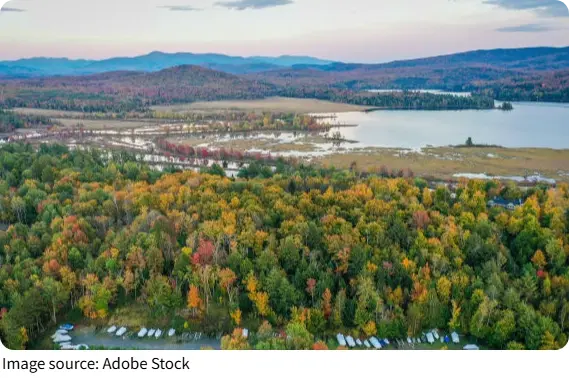
Exploring the Adirondack Mountains is like stepping into an American outdoor paradise that has been shaping nature lovers' dreams for centuries. Long before weekend warriors and photographers made this region world famous, the Adirondacks' dome like hills and sparkling waters stood largely wild and undisturbed.
Long before weekend warriors and photographers made this region world famous, the Adirondacks' dome like hills and sparkling waters stood largely wild and undisturbed. Today, they span a vast protected natural area perfect for hiking, canoeing, wildlife viewing, and reflection amid raw wilderness.
Where the Mountains Are and What They Offer
The Adirondack Mountains rise in northeastern New York state, forming an expansive region of forests, lakes, rivers, and over a hundred peaks. These peaks rise up to 5,344 feet at Mount Marcy, the state's highest point, and are part of the larger Adirondack Park, the largest protected state level park in the United States.
Within this immense protected land (over six million acres), you'll find a unique dome shaped mountain region whose terrain was carved by ancient glacial forces, leaving behind dramatic lakes, rounded summits, and fertile valleys.
Adirondack Mountains
How to Get Around
Visiting the Adirondacks is easiest by car, especially from major nearby cities:
• From Albany, NY: about a 2 hour drive north via I 87.
• From Burlington, VT: cross Lake Champlain via ferry and drive west.
• Within the region: local highways (like NY 73 through the High Peaks) connect towns and trailheads.
Public transportation is limited; most visitors rent a vehicle or join guided tours to access trailheads and scenic drives.
Top Outdoor Activities
Nature experiences are the heart of an Adirondack visit. Some highlights include:
1. Hiking and Climbing
Over 2,000 miles of hiking trails wind through the forest and across mountains. The most famous challenge is tackling the 46 Adirondack High Peaks — peaks above 4,000 feet, including Mount Marcy — where hikers can earn recognition for climbing all of them.
2. Canoeing, Kayaking & Fishing
Lakes and rivers like Lake Placid, Upper Saranac Lake, and the Ausable River offer paddling and fishing opportunities. The water quality throughout the park is generally excellent, and bass, trout, and salmon are common catches.
3. Wildlife Watching
The diverse ecosystems support deer, black bear, and many birds. Spring and fall bird migrations are especially spectacular.

Practical Visitor Information
• Operating Seasons:
– Hiking and boating are best from late May to early October.
– Some trails and roads (especially at higher elevations) may still experience snow in spring.
• Trail Access:
– Popular trailheads like Adirondack Loj (near Lake Placid) open early summer and are busiest in July–August.
• Camping:
– Backcountry lean tos and DEC campgrounds can range from about $20–$35 per night, but reservations for the most popular sites are recommended.
• Entry Fees:
– There is no general park entry fee for Adirondack Park itself; some facilities or guided activities may cost extra.
Where to Stay
• Lake Placid: A classic base with lodges, inns, and access to Olympic venues.
• Saranac Lake & Tupper Lake: Smaller towns with cozy cabins, bed & breakfasts, and proximity to canoe routes.
• Adirondack Loj: Backcountry access and on site lodging near major High Peaks trails.
A Thought at the Summit
In the Adirondacks, every vista and forest trail invites reflection. Here, the land reminds us that wilderness persists not because it is untouched, but because it continues to sustain curiosity, resilience, and wonder in all who come to explore it. Amid towering pines and glacial lakes, you don't just see the natural world — you feel your place within it.