The Easiest Palm Ever

Liam Reilly
| 29-04-2026
 · Lifestyle team
If you've ever killed a houseplant and sworn off greenery forever, the Parlor Palm might be the one that changes your mind.
This compact, feathery little palm — known botanically as Chamaedorea elegans — is one of the most forgiving indoor plants you can own.
It tolerates low light, doesn't demand constant watering, stays small enough for a bookshelf or a corner table, and somehow manages to make any room feel like it has better air quality and a slightly better attitude. It's been a popular houseplant since the Victorian era, and once you start growing one, it's pretty obvious why.
Light — Less Than You'd Think
Despite being a palm, the Parlor Palm actually prefers indirect light rather than direct sun. In its natural habitat in the rainforest understory of Central America, it grows beneath the canopy of taller trees — which means it's adapted to filtered, gentle light. A spot near a north or east-facing window works beautifully. Direct afternoon sun through a south or west window can scorch the leaf tips, turning them brown and crispy. If your room is quite dark, the plant will survive but grow more slowly and lose some of its deep green color. Bright indirect light is the sweet spot.
Watering — The Most Common Mistake
Overwatering is what kills most Parlor Palms. The roots are sensitive to sitting in soggy soil, which leads to root decay and yellowing leaves that don't recover. The rule is simple: water thoroughly, then let the top 3–4 centimeters of soil dry out completely before watering again. In a warm room during summer this might mean watering every 7–10 days. In winter when growth slows, stretch that to every 2–3 weeks. Always use a container with drainage holes — never let the plant sit in a saucer full of standing water. If your tap water is heavily treated, letting it sit overnight before using it can help prevent tip browning.
Soil and Container
A well-draining mix is essential. Use a standard indoor plant mix combined with a handful of perlite or coarse sand to improve drainage — roughly a 3:1 ratio works well. Terracotta containers are ideal because they're porous and help prevent overwatering by allowing excess moisture to evaporate through the walls. Repot only when the roots are visibly circling the bottom of the container or pushing through the drainage holes — Parlor Palms actually prefer being slightly root-bound and don't need frequent repotting.
Humidity and Temperature
Parlor Palms prefer temperatures between 18°C and 27°C and do best with moderate to high humidity. In dry indoor environments — especially in winter when heating systems pull moisture from the air — the leaf tips can turn brown. Fix this by misting the leaves lightly every few days, placing a small tray of water and pebbles near the container, or running a humidifier nearby. Keep the plant away from cold drafts, air conditioning vents, and heating units, all of which stress the plant significantly.
Feeding and Common Problems
Feed once a month during spring and summer with a balanced liquid fertilizer diluted to half strength. Stop feeding entirely in autumn and winter when the plant is resting. The most common problems to watch for:
1. Brown leaf tips: Usually low humidity or inconsistent watering
2. Yellow leaves: Overwatering or too much direct sun
3. Pale, washed-out color: Insufficient light
4. Small insects on leaves: Spider mites, treated with a damp cloth wipe and herbal oil spray
The Parlor Palm rarely needs pruning — simply trim any brown or damaged fronds at the base with clean scissors when they appear.
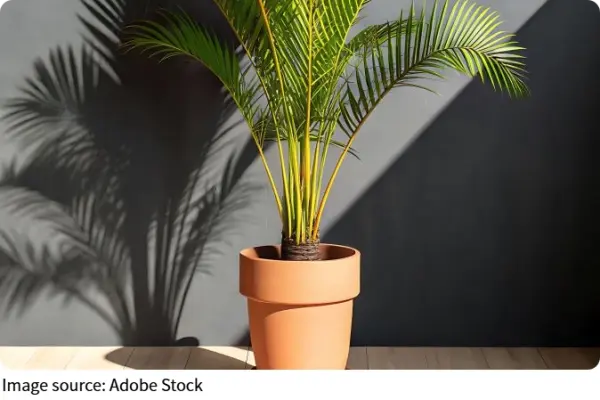
A healthy Parlor Palm can live for decades with minimal effort. Give it the right light, don't overwater it, keep it away from cold drafts, and it will reward you with steady, graceful growth that makes your space feel genuinely alive. For a plant that asks so little, it gives back quite a lot.