Wing and Diffuser Essentials

Chandan Singh
| 10-06-2026
 · Automobile team
Hello, Lykkers! Ever wondered why high performance cars have those flaps and fins sticking out?
It is not just for looks. Every curve and edge is carefully engineered to manage air, turning drag into a tool for grip and control.
When a car cuts through air at speed, it faces two main forces: drag slows it down, and lift can make it feel light and unstable. Sports car designers fight this with aerodynamic add ons that redirect airflow. The goal is to generate downforce: a downward push that presses the tires into the road, increasing traction without adding weight.
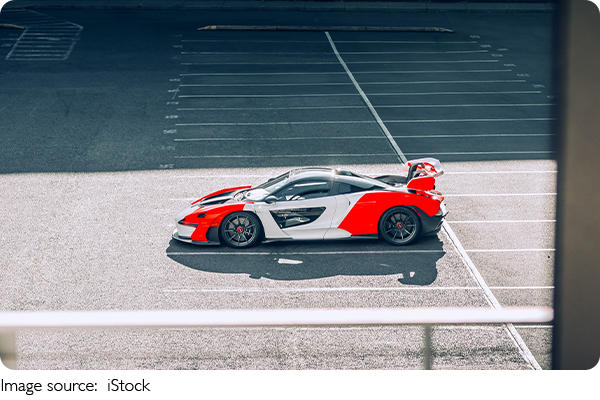
The Rear Wing: Pushing Down For Grip
A rear wing works like an upside down airplane wing. While an airplane wing curves the top to create lift, a sports car wing curves the underside to create an area of low pressure below it. This pressure difference pulls the wing downward, and since the wing is bolted to the car body, the whole car gets pushed into the pavement. More downforce means higher cornering speeds and better stability during hard braking.
Modern active wings can change angle automatically. At low speeds they lie flat to reduce drag and improve fuel economy. When you press the throttle or brake hard, the wing rises to maximize downforce exactly when needed. Some systems even use the wing as an air brake, tilting steeply to create massive drag and help slow the car from very high speeds.
The shape and size matter. A tall, narrow wing mounted on struts is typical on track focused models. A low, integrated wing built into the rear deck is subtler but still effective for road use. Material choices, usually carbon fiber or aluminum, keep weight low while handling extreme forces.
The Diffuser: Smoothing The Underbelly
The diffuser sits underneath the rear bumper. Its job is to manage the air flowing under the car. As air travels beneath a flat floor, it speeds up and creates a low pressure zone, which essentially sucks the car toward the ground. The diffuser is a flared channel that gradually expands toward the rear. This expansion slows the high speed air down smoothly, preventing turbulence that would otherwise disturb the low pressure area.
Without a diffuser, the sudden transition from the under floor to the open air behind the car would cause air to swirl and create lift. By controlling that expansion, the diffuser maintains a clean flow, maximizing the suction effect. The result is a stable, planted feel at high speed, especially when exiting corners.
Diffusers often have vertical fins or strakes. These strakes guide the airflow in straight lines and prevent lateral mixing that reduces efficiency. The depth and angle of the diffuser are tuned for each car. Too steep an angle causes flow separation; too shallow leaves downforce on the table.

How They Work Together
The wing and diffuser complement each other. The wing manages airflow above the car, while the diffuser handles the underside. Together they create a balanced aerodynamic package. If the wing produces too much rear downforce without the diffuser's contribution, the car might oversteer. If the diffuser dominates, the rear might be too stable and the front could feel light. Engineers use wind tunnels and computational fluid dynamics to calibrate both components so the car stays neutral and predictable at all speeds.
Real world sports cars like the Porsche 911 GT3 RS or the Ferrari 488 Pista have extreme versions of these designs, but even everyday performance cars like the Ford Mustang GT350 use clever spoilers and under tray diffusers to improve high speed manners.
Practical Considerations
For owners, aftermarket wings and diffusers are popular modifications. But be careful: adding a wing without matching the rest of the car's aero can upset balance. A poorly designed diffuser can create drag or lift where you do not want it. Always consult experts who understand the specific vehicle's airflow patterns. Track use often demands more aggressive setups, while road cars need a compromise for comfort and visibility.
So next time you see a sports car with a prominent rear wing and a sculpted rear bumper, know that those pieces are working hard. They turn invisible air into a force that keeps the car glued to the road, making every drive safer and more thrilling. Think about how the air moves around your own car, and perhaps consider what a well chosen wing or diffuser could do for your driving experience. Stay curious, Lykkers, and keep pushing the limits of understanding.