Motorcycle Troubles

Pankaj Singh
| 07-07-2026
 · Automobile team
Motorcycle breakdowns can be frustrating, especially when you're miles away from a repair shop.
Whether you're on a weekend ride or commuting to work, it's always good to have some basic troubleshooting skills under your belt.
Here's how you can quickly check and fix some of the most common issues yourself.
1. Engine Won't Start
If your motorcycle engine refuses to start, the issue could be something as simple as a dead battery or a clogged fuel line. Here's a quick checklist:
• Check the Battery
A dead or weak battery is often the culprit. Test the battery by turning on the headlights. If they seem dim, it's time to recharge or replace them.
• Inspect the Spark Plug
A faulty spark plug can prevent ignition. Remove the spark plug and check for carbon buildup. If it's dirty, clean it or replace it if it's worn out.
• Fuel Supply
If the fuel tank is full but the engine still won't start, there could be an issue with the fuel line or filter. Make sure the fuel petcock is in the "on" position, and inspect the fuel line for leaks or blockages.
By following these steps, you can often get your bike back on the road without a mechanic.
2. Overheating
An overheating engine can leave you stranded. Fortunately, this is often a simple issue that can be resolved on the spot.
• Check Coolant Levels
If your bike has a liquid-cooled engine, low coolant could be the problem. Check the coolant reservoir and top it up if necessary.
• Inspect Radiator
Ensure the radiator isn't clogged with dirt or debris. If it is, clean it carefully with a hose or compressed air.
• Monitor Oil Temperature
If the oil is low, it can cause the engine to overheat. Check the oil levels and top them up if needed.
Regularly monitoring coolant and oil can prevent these issues from becoming major problems.
3. Flat Tire
Getting a flat tire on a ride is a common occurrence, but with the right tools, you can handle it yourself.
• Use a Tire Patch Kit
If you're in a pinch, a tire patch kit can help seal small punctures. Just follow the kit's instructions to apply the patch to the hole.
• Check for Leaks
If you're not sure where the leak is, submerge the tire in water and look for bubbles. Once you locate the puncture, apply the patch.
• Consider Tubeless Tires
Many modern motorcycles come with tubeless tires, which make it easier to repair a puncture without having to remove the wheel.
If you're riding long distances, it's a good idea to carry a portable pump or CO2 cartridge, just in case you need to top off a low tire.
4. Electrical Issues
Electrical problems can be tough to diagnose, but there are a few quick checks you can do.
• Check the Fuses
A blown fuse can cause electrical failure, such as the lights not working. Inspect the fuses and replace any that are broken.
• Examine the Wiring
Look for frayed wires, loose connections, or signs of corrosion. Electrical issues often come from poor connections, especially around the battery terminals.
• Test the Charging System
If your bike's battery keeps draining, it could be a problem with the charging system. Test the alternator using a multimeter to ensure it's generating the right voltage.
Taking the time to check the electrical components can save you from a total breakdown.
5. Chain Issues
A loose or broken chain is another common motorcycle problem that can prevent you from continuing your ride.
• Check the Tension
If the chain is too tight or too loose, it can cause issues with performance. Check the tension and adjust it according to your motorcycle's manual.
• Lubricate the Chain
A dry chain can cause excessive wear and tear. Regularly clean and lubricate the chain to keep it running smoothly.
• Inspect for Wear
If the chain appears worn or links are damaged, it's time to replace it. A broken chain can lead to serious accidents, so it's important to keep it in good condition.
6. Noisy Engine
A noisy engine can indicate an underlying problem that needs attention. Here's how to diagnose it:
• Check the Oil Level
Low oil can cause engine components to rub together, producing noise. Make sure the oil level is adequate and check for any metal shavings in the oil, which could signal internal damage.
• Examine the Valves
If the engine noise is more like a tapping sound, it could be a valve issue. Check the valve clearance and adjust it if necessary.
• Look for Loose Parts
Sometimes a loose bolt or component can cause strange noises. Inspect the engine and tighten any loose parts.
Motorcycles are mechanical machines that require regular maintenance, but diagnosing common problems doesn't have to be intimidating. With a little time and effort, you can keep your bike running smoothly.
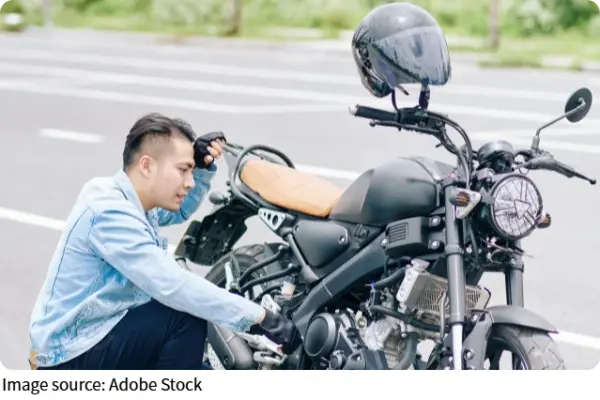
By learning how to troubleshoot these issues, you can avoid expensive mechanic bills and get back on the road faster. Always refer to your owner's manual for specific guidance on your bike's components, and remember, regular maintenance can prevent most of these problems from happening in the first place.