Scotland by Small Ship

Raghu Yadav
| 22-08-2026
 · Travel team
Scotland’s western and northern coasts are full of places that large cruise ships simply cannot reach. Narrow sea lochs, tiny harbours and isolated islands often require something much smaller.
That is where a growing fleet of converted fishing, rescue and working vessels has found its niche. Carrying only a handful of passengers, these ships combine expedition-style travel with comfortable cabins, local food and the flexibility to change course when wildlife appears or the weather shifts.
Why 12 Passengers Matter
The unusual scale of these cruises is partly explained by maritime regulation.
Under UK rules, a vessel carrying more than 12 passengers is defined as a passenger ship and becomes subject to additional construction and operational requirements. Boats carrying no more than 12 passengers operate under different safety frameworks.
That threshold helped make very small commercial cruises practical along Scotland’s coast.
The result feels closer to travelling aboard a private expedition vessel than joining a conventional cruise. Crews know every passenger, meals are communal and the bridge may remain accessible for conversations with the skipper.
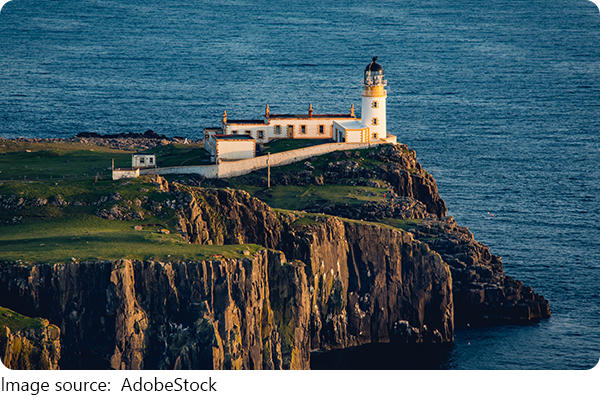
Hebrides and St Kilda
Oban has become one of the main departure points for these journeys.
Hebrides Cruises began operating in the 1990s and now uses several small vessels capable of entering sheltered anchorages around the Inner and Outer Hebrides. Routes can reach St Kilda, the Small Isles and remote parts of the west coast.
Their compact size allows passengers to approach sea cliffs and quiet beaches while watching for dolphins, porpoises, whales, otters and sea eagles. The company describes its vessels as providing panoramic viewing areas designed around wildlife observation.
St Kilda is particularly appealing for its dramatic cliffs, seabird colonies and extraordinary isolation, though reaching it always depends on sea conditions.
Orkney and Ancient Scotland
Farther north, small ships also reach Orkney, where coastal scenery comes with one of Europe’s richest concentrations of prehistoric sites.
The Majestic Line operates six-night Orkney itineraries aboard the 12-passenger Glen Shiel. Trips combine island hopping with archaeological landscapes and local communities. In the 2026 season, these voyages were priced at about €4,120 per person
Longer ten-night expeditions covering more of Scotland’s northern coastline cost around €6,070 per person.
These prices typically place small-ship cruising firmly in the premium category, but accommodation, meals and much of the daily programme are usually bundled into the trip.
Quiet Islands of Argyll
For a shorter introduction, Argyll provides easier access to islands and sheltered waters closer to the mainland.
Argyll Cruising operates the 10-passenger Splendour on routes around Arran, Ailsa Craig and the sea lochs of western Scotland. Six-night 2026 departures started at approximately €2,790 per person, while shorter three-night trips were around €1,460.
These itineraries can combine coastal walks, castles, small communities and wildlife without requiring a long open-sea voyage.
Scotland
Why Small Ships Feel Different
The greatest advantage is flexibility.
A large vessel follows a tightly controlled schedule. A small skipper can sometimes alter an anchorage, spend longer watching wildlife or choose a quieter landing point when conditions permit.
There are also fewer people arriving at once. A group of 10 stepping ashore in a small island community has a very different impact from thousands of passengers disembarking from a major liner.
The experience extends inland too. Small vessels can travel through the Caledonian Canal, explore sea lochs beneath Highland mountains and reach communities that rarely appear on conventional cruise schedules.
When to Go
The main season runs from spring into autumn. May through September offers long daylight hours and the broadest choice of itineraries.
Summer provides milder conditions but also stronger demand. September can be especially appealing for quieter ports and softer autumn light, though Scottish weather remains unpredictable at any time.
Travellers should also accept that routes are never completely guaranteed. Wind and sea conditions can determine whether a remote island landing is possible.

A Different Way to See Scotland
Small-ship cruising is not a cheap alternative to travelling independently. Its appeal lies elsewhere: access.
Instead of viewing Scotland’s wild coastline from a distant deck, a vessel carrying eight, 10 or 12 passengers can enter the narrow lochs, quiet anchorages and tiny island communities that make the country’s maritime landscape so distinctive.